














Home
About Us
Profile
Enterprise Style
Company News
Jobs
Technology
Product
Anticorrosive Coating
Fire-retardant Coating
Special Coating
Architectural Coating
Water-based Paint
Project
Petrochemical
Rail
Large Venues
Power Industry
More
News
Industry News
Enterprise style
Contact Us
Principle Green Development Safe Development
Coating Defect Detection
In the protection of large-scale structures such as bridges, storage tanks, and pipelines, coating systems act like a “suit of armor,” effectively shielding these structures from external corrosion and extending their service life. However, if this “armor” contains discontinuities—such as pinholes or missed coatings—it can become a hidden “entry point” for structural degradation. Oxygen and electrolytes from the outside environment can seep through these gaps into the substrate, causing corrosion of the metal base material and seriously compromising the structure’s safety and durability.
14
2025
/
08
List of Responsibilities for On-site Coating Engineers
In industrial coating projects, the on-site coating engineer plays a pivotal role in ensuring coating quality. Their work spans the entire project lifecycle—from initial preparation to final acceptance—where every stage directly impacts the coating’s performance, service life, and project costs. Below are the detailed responsibilities and essential competencies of an on-site coating engineer.
07
How much do you know about fire-resistant coatings for steel structures?
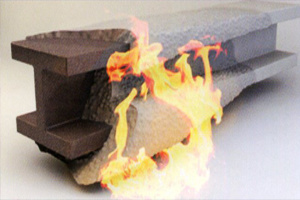
Addressing the Fire-Resistance Defects of Steel Structures: Although steel boasts high strength, it also has excellent thermal conductivity and tends to heat up and soften rapidly when exposed to fire. In a typical fire, ordinary steel structures lose their load-bearing capacity in about 15 minutes. However, fire-resistant coatings can delay the heating of steel by providing thermal insulation or by expanding and foaming to form a protective layer, thereby buying valuable time for evacuating personnel and extinguishing the fire.
09
Anti-corrosion systems: ISO 12944 standard ranges from C1 to C5.
Corrosion is the phenomenon in which materials—primarily metals—undergo chemical or electrochemical reactions with their surrounding environment, leading to a deterioration of their performance. In the fields of construction, industry, and marine engineering, corrosion prevention has always been a critically important issue. Whether it’s towering steel structures reaching for the clouds or offshore facilities deep in the ocean, corrosion can pose a serious safety hazard.
Introduction to powder coating formula?
Zirconium phosphate raw materials can be widely used in special coatings such as architectural coatings, canned coatings, automotive coatings, home appliance coatings, wood coatings, plastic coatings, ship coatings, steel structure coatings, rubber coatings, aviation coatings, etc. It mainly plays the following roles: A. Removing harmful odors from coatings B. Enhancing friction and wear resistance C. Increasing service life D. High temperature resistance, acid and alkali resistance E. Strong stability F. Increasing adhesion and leveling G. Antibacterial effect Preliminary results from formula testing indicate that adding 1%, 2% zirconium phosphate significantly improves its wear resistance. Adding 1%, 2%, and 3% zirconium phosphate significantly improves its corrosion resistance after 500 hours of salt spray testing. If you have any further questions, please consult our hotline at 400-828-1501
12
2023
05
What are the advantages of high-pressure airless spraying?
Today, we will mainly talk about the advantages of high-pressure airless spraying: 1. Less paint mist dispersion. Without the use of air atomization, the dispersion of paint mist is greatly reduced, and the spraying viscosity of the coating is high, the construction solid content is high, and the mixing of dilute solvents (water) is low, reducing environmental pollution; High utilization rate of coatings, saving coatings. 2. The amount of paint sprayed is large. A thicker paint film can be obtained, reducing the number of coating passes and improving coating efficiency. It is more than 10 times that of manual brushing, and more than 3 times that of air spraying, which can reach 300-500 ㎡/h. 3. The viscosity of coatings has a wide range of applications. It can be applied to both ordinary coatings with lower viscosity and coatings with higher viscosity. 4. Good coating effect for complex workpieces. Due to the absence of airflow, the shielding effect of airflow rebound on the deposition of paint mist in dead corners, gaps, and other areas of the workpiece is avoided.
How to solve the problem of insufficient coating thickness?
During the construction process of water-based paint, there are sometimes situations where the coating thickness is insufficient. The main reasons for this problem are the following three aspects: 1. The coating does not form enough coating thickness and flows directly. 2. The coating is fully penetrated into the molding sand, resulting in insufficient coating thickness. 3. The surface of the sand mold is coated with a release agent, which reduces the permeability of the coating and directly affects the coating thickness. Specific solutions: 1. Increase the viscosity of the coating (maximum value not exceeding 7S) to improve the coating adhesion and avoid excessive flow of the coating; 2. Improving the solidity of sand molds can effectively prevent excessive penetration of coatings; 3. Grind off the mold release agent on the surface of the pattern with fine sandpaper before applying flow coating. 4. The wet thickness requirement for the coating of cast iron parts: generally, the thickness for thin-walled castings is 0.15~0.30mm. Medium size castings range from 0.30 to 0.75mm, thick walled castings range from 0.75 to 1.00mm, and extra thick castings range from 1.00 to 2.00mm.